Korean Bibimbap
Uitgelicht onder: Favoriete internationale gerechten
Korean Bibimbap is a vibrant and nutritious dish that combines rice, vegetables, and your choice of protein, all topped with a fried egg and delicious gochujang sauce.
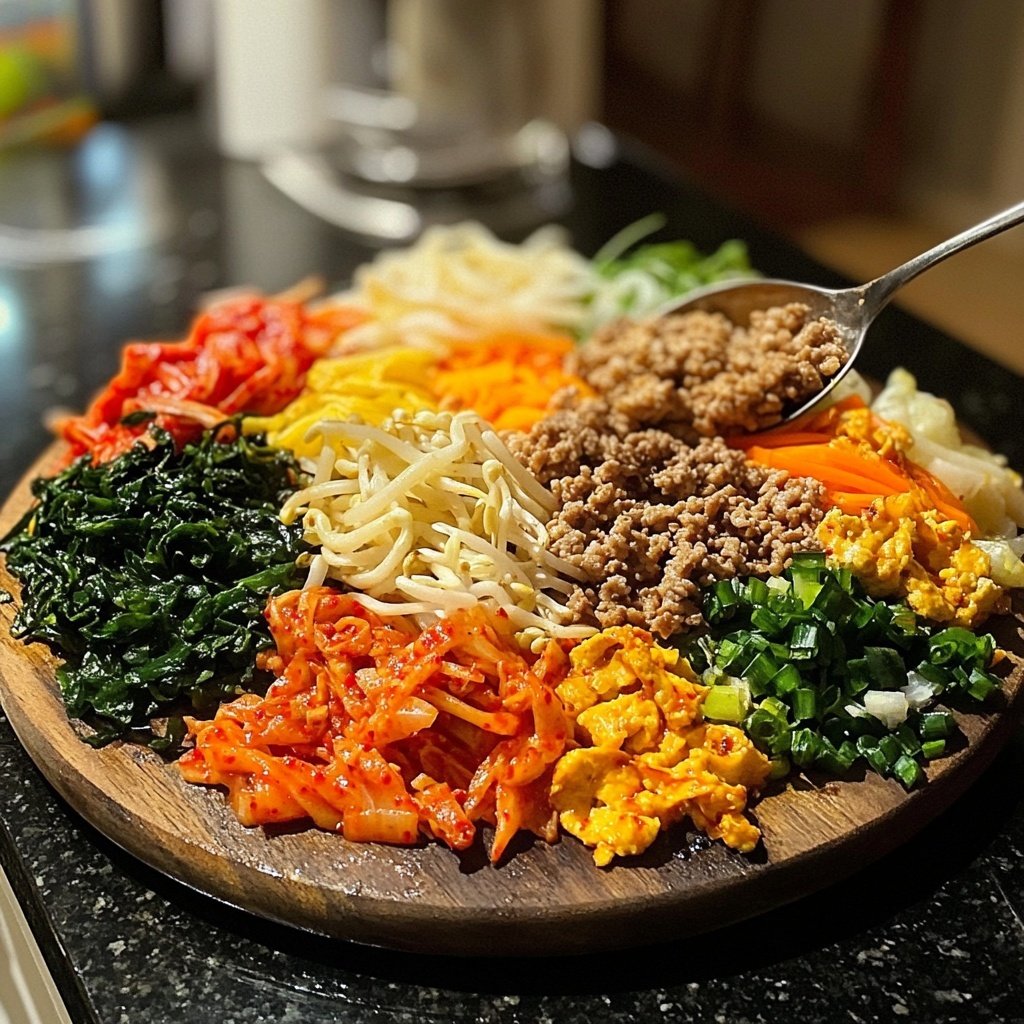
Bibimbap, which translates to 'mixed rice', is a beloved Korean dish that showcases the country’s culinary philosophy of balance and harmony. Each ingredient is prepared separately and artfully arranged before being mixed together, allowing each flavor to shine.
Why You'll Love This Recipe
- A colorful array of fresh vegetables
- Customizable with your favorite proteins
- Deliciously spicy with gochujang sauce
A Colorful Celebration
Korean Bibimbap is not just a meal; it's a feast for the eyes and the palate. The vibrant colors of fresh vegetables like spinach, carrots, and zucchini come together to create an appealing dish that invites you to dig in. Each ingredient contributes not only to the aesthetic but also to the nutritional value of the dish, making it a healthy choice for any meal.
The beauty of Bibimbap lies in its versatility. You can mix and match vegetables based on your preferences or what you have on hand. This makes it perfect for using up leftover veggies or experimenting with seasonal produce. Whether you’re a fan of crunchy textures or tender bites, you can customize your Bibimbap to suit your taste.
A Nutritional Powerhouse
Bibimbap is packed with nutrients that can energize your day. The combination of rice, protein, and a variety of vegetables ensures you're getting a balanced meal rich in carbohydrates, vitamins, and minerals. Spinach is loaded with iron, while carrots provide a healthy dose of beta-carotene. This dish is a great way to incorporate more vegetables into your diet without feeling deprived.
For those looking to boost their protein intake, Bibimbap is highly adaptable. You can opt for ground beef, tofu, or even a mix of both. Adding protein not only enhances the flavor but also makes the dish more filling. This flexibility means you can easily create a satisfying meal that meets your dietary needs.
The Perfect Blend of Flavors
One of the standout features of Bibimbap is the harmonious blend of flavors. The nuttiness from the sesame oil, the umami from the mushrooms, and the kick from the gochujang sauce come together to create a deliciously complex taste profile. This dish is all about balance, and when you mix everything together, you achieve an incredible fusion of flavors that tantalizes your taste buds.
The gochujang sauce is a key factor in elevating the dish. Its spicy, sweet, and savory notes add depth and excitement, making every bite enjoyable. If you prefer a milder flavor, you can adjust the amount of gochujang to suit your palate. The beauty of Bibimbap lies in its adaptability, allowing you to enjoy it just the way you like.
Ingrediënten
Gather the following ingredients to prepare your Korean Bibimbap:
Rice and Vegetables
- 2 cups cooked white rice
- 1 cup spinach, blanched
- 1 cup carrots, julienned
- 1 cup zucchini, julienned
- 1 cup bean sprouts, blanched
- 4 shiitake mushrooms, sliced
- 1 tablespoon sesame oil
- Salt to taste
Protein and Toppings
- 4 eggs
- 1 cup ground beef or tofu (for vegetarian option)
- Gochujang (Korean chili paste)
- Sesame seeds for garnish
- Green onions, sliced for garnish
Ensure all ingredients are prepped and ready to go before you start cooking.
Bereidingswijze
Follow these steps to create your Korean Bibimbap:
Prepare the Vegetables
In a pan, heat the sesame oil over medium heat. Sauté the carrots, zucchini, and shiitake mushrooms separately until tender. Season each with a little salt.
Cook the Protein
In the same pan, cook the ground beef or tofu until browned and cooked through. Season with salt and pepper.
Fry the Eggs
In a separate pan, fry the eggs sunny-side up until the whites are set but the yolks are still runny.
Assemble the Bibimbap
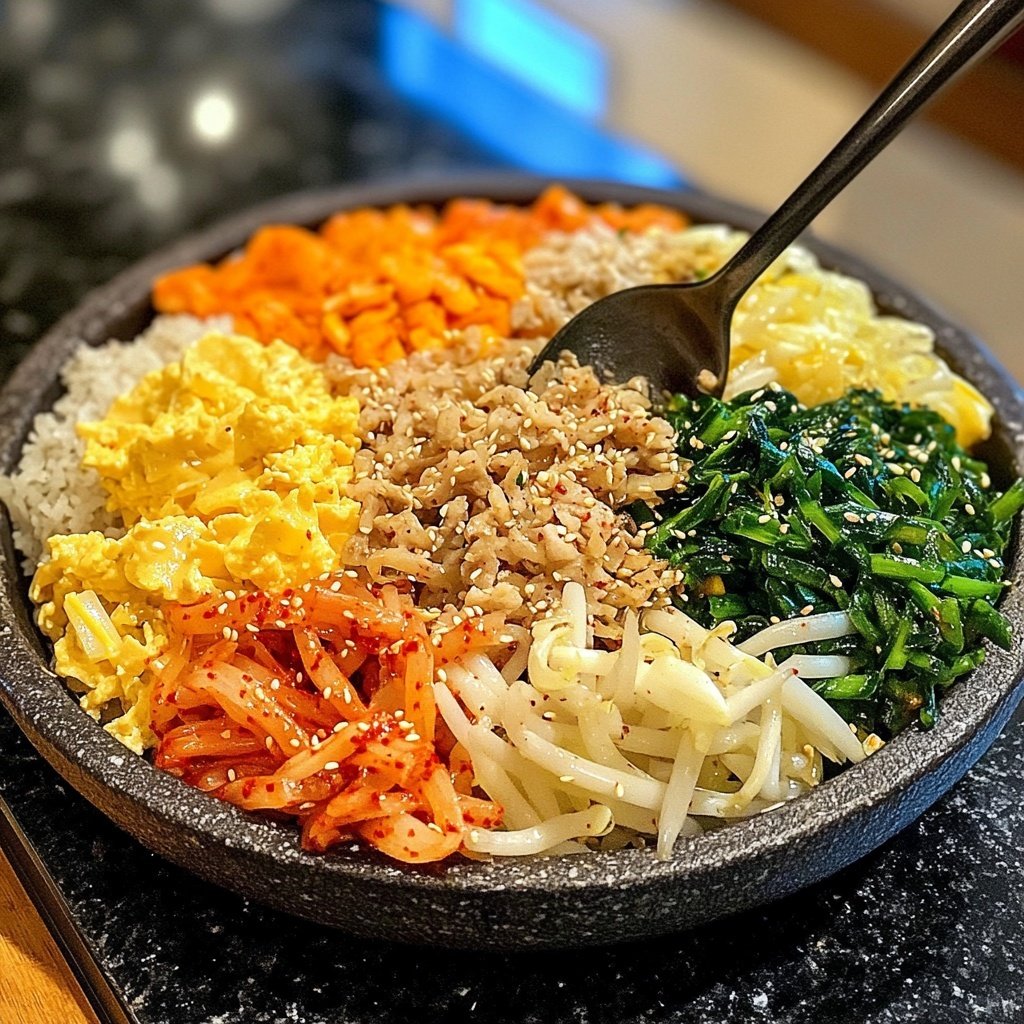
In bowls, place a serving of rice at the bottom. Arrange the sautéed vegetables, protein, and a fried egg on top. Drizzle with gochujang and sprinkle with sesame seeds and green onions.
Mix and Enjoy
Before eating, mix all the ingredients together for a delicious combination of flavors!
Serve your Bibimbap immediately for the best flavor and texture.
Professionele Tips
- Feel free to customize your Bibimbap with any seasonal vegetables or proteins you prefer!
Tips for the Best Bibimbap
To achieve the best texture and flavor, make sure to sauté each vegetable separately. This not only enhances the individual flavors but also helps maintain their crispness. Overcrowding the pan can lead to steaming rather than sautéing, which may result in a less appealing dish.
Don’t hesitate to experiment with toppings! Besides the traditional sesame seeds and green onions, you can also include sliced avocado, kimchi, or even a sprinkle of furikake for an extra flavor boost. These additions can make your Bibimbap even more delightful and unique.
Serving Suggestions
Bibimbap can be served as a main dish or as a side. Its rich flavors and colorful presentation make it an excellent choice for gatherings or special occasions. Pair it with a refreshing cucumber salad or a light miso soup to complete the meal.
If you're preparing Bibimbap for a group, consider setting up a Bibimbap bar where everyone can customize their own bowl. This interactive dining experience is fun and allows guests to choose their favorite ingredients, making it a memorable meal.
Storage and Reheating
Leftover Bibimbap can be stored in an airtight container in the refrigerator for up to three days. To keep the veggies fresh, consider storing them separately from the rice and protein. When you're ready to enjoy it again, simply reheat in a microwave or in a skillet over low heat until warmed through.
For best results, avoid reheating the fried egg along with the other ingredients, as it may become rubbery. Instead, fry a fresh egg to top your reheated Bibimbap for that perfect sunny-side-up finish.
Vragen Over Recepten
→ Can I make Bibimbap vegetarian?
Yes! Simply replace the meat with tofu or additional vegetables.
→ What is gochujang?
Gochujang is a Korean chili paste that adds a spicy and sweet flavor to dishes.
→ Can I prepare the ingredients ahead of time?
Absolutely! You can prep the vegetables and protein in advance and store them in the fridge.
→ Is Bibimbap gluten-free?
It can be gluten-free if you ensure the gochujang and soy sauce (if used) are gluten-free.
Korean Bibimbap
Gemaakt door: Lucy Thompson
Recepttype: Favoriete internationale gerechten
Vaardigheidsniveau: Intermediate
Eindportie: 4 servings
Wat je Nodig Hebt
Rice and Vegetables
- 2 cups cooked white rice
- 1 cup spinach, blanched
- 1 cup carrots, julienned
- 1 cup zucchini, julienned
- 1 cup bean sprouts, blanched
- 4 shiitake mushrooms, sliced
- 1 tablespoon sesame oil
- Salt to taste
Protein and Toppings
- 4 eggs
- 1 cup ground beef or tofu (for vegetarian option)
- Gochujang (Korean chili paste)
- Sesame seeds for garnish
- Green onions, sliced for garnish
Stappen
In a pan, heat the sesame oil over medium heat. Sauté the carrots, zucchini, and shiitake mushrooms separately until tender. Season each with a little salt.
In the same pan, cook the ground beef or tofu until browned and cooked through. Season with salt and pepper.
In a separate pan, fry the eggs sunny-side up until the whites are set but the yolks are still runny.
In bowls, place a serving of rice at the bottom. Arrange the sautéed vegetables, protein, and a fried egg on top. Drizzle with gochujang and sprinkle with sesame seeds and green onions.
Before eating, mix all the ingredients together for a delicious combination of flavors!
Extra Tips
- Feel free to customize your Bibimbap with any seasonal vegetables or proteins you prefer!
Voedingswaarde (Per Portie)
- Calories: 550 kcal
- Total Fat: 24g
- Saturated Fat: 6g
- Cholesterol: 185mg
- Sodium: 650mg
- Total Carbohydrates: 62g
- Dietary Fiber: 5g
- Sugars: 6g
- Protein: 22g